
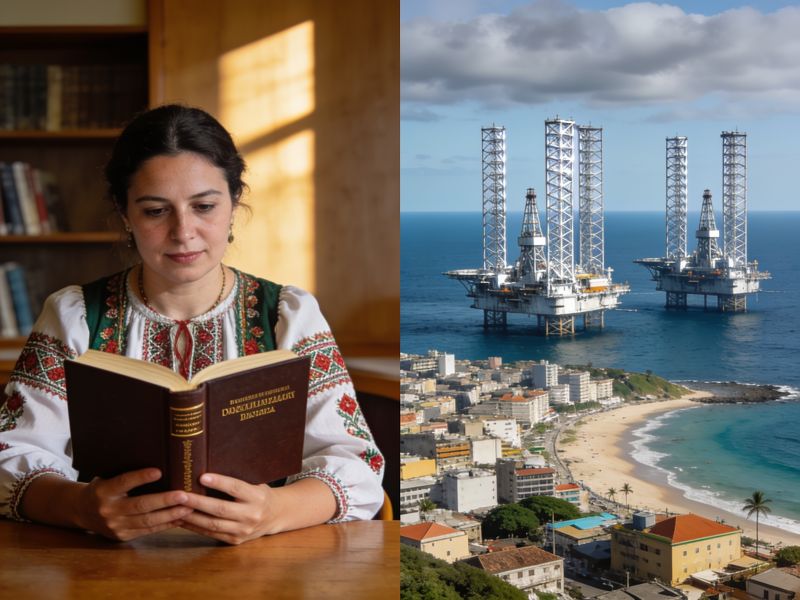
Marica is not just a name you hear in passing. It appears on maps, in historical records, and in everyday conversation across several continents. In Hungary, Marica is a common given name for women, a diminutive of Mária that carries a warm, familiar tone. In Brazil, the Rio Maricá flows through the state of Rio de Janeiro。and the city of Maricá has become a case study in urban development and oil revenue management. The same six letters, yet the associations vary wildly depending on where you stand. That duality fascinates me. A name can be a person, a place, and a piece of cultural memory all at once.Take the Hungarian Marica. Walk through any town in the Great Plain and you'll meet grandmothers, shopkeepers。and schoolteachers who answer to it. The name dates back centuries, appearing in folk songs and literature. One of my favorite references is the poet Sándor Petőfi's verse that mentions a Marica in a pastoral setting—it's a name that feels rooted in the soil. Younger generations in Budapest might consider it old-fashioned, but in rural areas it retains a quiet dignity. I once asked a bookseller in Szeged why she named her daughter Marica. She shrugged and said, 'Because it sounds like someone who keeps her promises.' That's the kind of intuition you can't quantify, but it sticks with you.Then there's Maricá, Brazil. The city sits about 40 kilometers east of Rio de Janeiro and has transformed dramatically since the discovery of offshore oil in the Campos Basin. Royalties from petroleum have funded a basic income program, bike lanes, and a new municipal hospital. Maricá's experiment with a local currency called mumbuca drew international attention from economists. Not everything is perfect—critics point to dependence on oil revenues and uneven infrastructure in peripheral neighborhoods. Still。the name Maricá now carries a reputation for bold social policy. A colleague from Niterói told me, 'Maricá used to be a sleepy fishing town. Now it's a laboratory.' That shift happened within a single generation.
The name also appears in the natural world. Marica is a genus of sedge plants, common in wetlands. Botanists use the term without blinking, but for me, it's a reminder that Marica is not confined to human culture. There's also a species of hummingbird called the Marica hummingbird in some older field guides—though taxonomists have since reclassified it. Names migrate across categories. A plant, a person, a place. The common thread seems to be persistence. Marica doesn't grab headlines, but it endures in quiet。unassuming ways.So what does Marica mean, really?It means whatever the speaker intends. In a Budapest classroom, it's a child's name. In a Rio de Janeiro news broadcast, it's a municipality with a controversial budget. In a wetland survey, it's a clump of grass. The word resists a single definition, and that's precisely its strength. You don't need to resolve the ambiguity—you just need to notice it. Marica isn't a brand or a slogan. It's a name that works because people keep using it。
for their own reasons, in their own places. That's more than most words can claim.