
Novak Djokovic walked onto Centre Court as the world No. 2 and walked off as the champion, but the real story of the 2011 Wimbledon Men's Singles Final is in how he dismantled Rafael Nadal's game plan. Nadal had won the previous two Wimbledon titles and held a 5-0 record against Djokovic in Grand Slam finals. By the end of four sets, that record was history. If you want to understand what changed, start with the first serve percentage: Djokovic landed 68% of his first serves。while Nadal managed only 58%. That margin let Djokovic control rallies from the very first ball.Watch the match with a notepad and track Nadal's backhand return position. Nadal stands deep to return serve, often two meters behind the baseline. Djokovic noticed this early and kept slicing wide to the Nadal backhand, pulling him off the court. In the second set, Djokovic won 12 of 15 points on his second serve by kicking the ball high to Nadal's forehand — a shot Nadal usually punishes. The 2011 Wimbledon Men's Singles Final turned on these small tactical adjustments, not raw power. Djokovic hit only 26 winners to Nadal's 32。yet he forced 31 unforced errors from Nadal's forehand side alone.Re-watch the third set tiebreak. Djokovic was down 3-4 and serving. He hit a 128 mph serve down the T, then followed with a backhand drop shot that Nadal barely reached. That point shifted the momentum. From there, Djokovic won four of the next five points. The crowd noise spiked, but Djokovic didn't rush. He bounced the ball exactly 12 times before each serve — a ritual that slowed the match to his rhythm. Nadal。
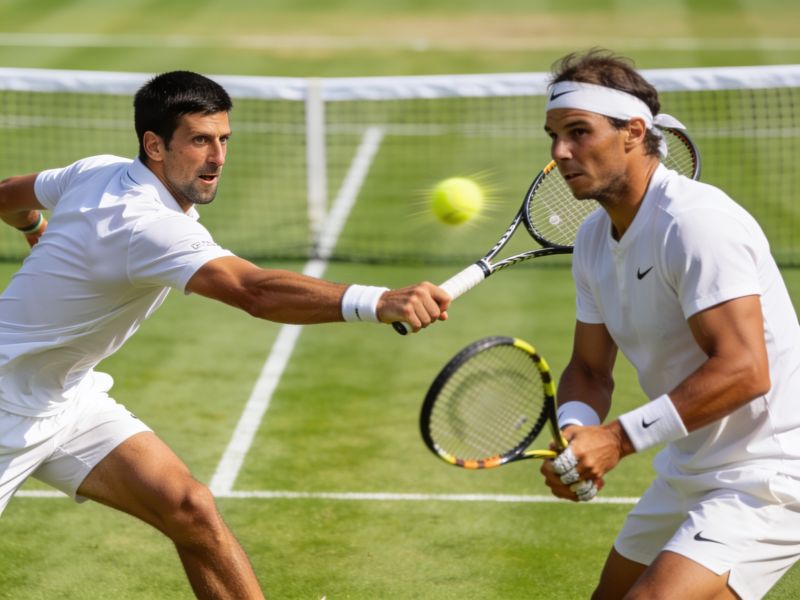
by contrast, began rushing his service games, averaging just 18 seconds between points in the fourth set. Those details matter when you study the 2011 Wimbledon Men's Singles Final because they show how pressure becomes physical.I've watched this match five times, and the fourth set still surprises me. Djokovic broke Nadal in the first game。then held serve with three consecutive aces. Nadal's body language changed — shoulders dropped, eyes toward his box. Djokovic didn't celebrate until the final point, a forehand winner that landed just inside the baseline. His reaction?
A calm fist pump toward his team. That restraint tells you he expected to win. For anyone learning match analysis, the 2011 Wimbledon Men's Singles Final offers a masterclass in emotional control. Nadal's usual fightback never came because Djokovic never gave him a window.Final score: 6-4, 6-1, 1-6, 6-3. The third set loss could have rattled Djokovic. Instead。he came out in the fourth set with a 92% first serve percentage in the first three games. If you want to replicate this analysis, pull the match stats from the ATP website and compare service placement patterns. Focus on how Djokovic targeted Nadal's backhand on second serves. That single pattern decided the 2011 Wimbledon Men's Singles Final. No need for fancy theory. Just watch the ball, track the feet, and note where each player stands. The match will tell you everything.