he whistle blows at 8 a.m. in Ezeiza, and the grass is still wet. A group of teenagers in sky-blue bibs sprint through a rondo, two touches max。heads swiveling before the ball arrives. This is where Argentina U20 does its quiet, relentless work. No cameras. No press conferences. Just the smell of cut grass and the sound of coaches yelling '¡Ojo!' when a pass goes astray.
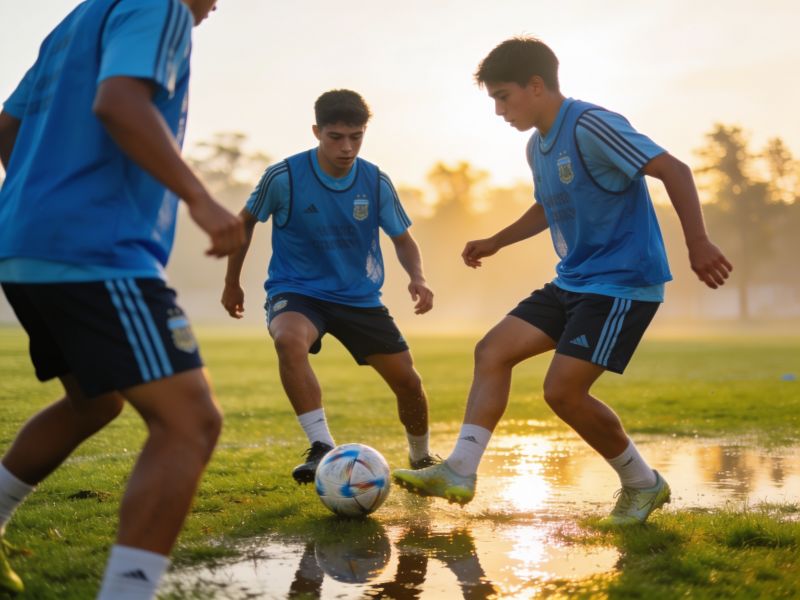
I spent a week watching this squad train last month, and one thing stood out: the sheer speed of thought. These kids don't just react;they anticipate. Take the 17-year-old playmaker from Rosario—built like a broomstick but with a left foot that could open a tin can. In a small-sided game。he received a pass under pressure, feinted twice, and slid a no-look ball through three defenders. The finish was scuffed. The idea was world-class. That's the Argentina U20 way: the concept matters more than the execution at this stage.Critics love to say Argentina U20 thrives on individual brilliance and neglects structure. That's lazy. Watch a full 90 minutes and you'll see a compact 4-3-3 that morphs into a 4-2-3-1 without the ball. The pressing triggers are drilled into them—when the opponent's fullback takes a heavy touch。the winger and central midfielder pounce like a trapdoor spider. It's not chaotic. It's calculated risk. The coaching staff, many of whom played in the domestic leagues, emphasize game intelligence over robotic patterns. 'We don't want robots,' one assistant told me. 'We want players who can solve problems on their own.'But here's the uncomfortable truth: for every standout, there's a cautionary tale. The 2019 Argentina U20 squad had a defender who looked destined for Europe—fast, aggressive, flawless in the air. Four years later, he's playing in the second division of Chilean football. Why?
Injuries。a bad loan move, and the brutal reality that talent alone doesn't cut it. The Argentina U20 setup produces hype, but it also produces heartbreak. The system's strength—giving young players freedom—can also be its weakness when they hit the professional grind. Freedom without structure at the senior level becomes chaos.What keeps this pipeline flowing is the sheer volume of games. Argentina U20 plays more competitive matches than most European counterparts—friendlies against local senior sides。regional tournaments, the South American Championship. That's where the real education happens. I watched a 3-0 loss to a rugged Paraguayan U20 side last year。
and the Argentine midfield got bullied physically. Instead of panicking, the coaches showed them clips of exactly where they lost the second ball. Three months later, they beat the same opponent 2-0. That's not luck. That's iteration. Argentina U20 is a laboratory, and the experiments don't always work—but they always teach something.